
Small Business Taxes for LLC Owners: The Complete 2026 Guide
Small business taxes for LLC owners in 2026: self-employment tax, the QBI deduction, four new Schedule 1-A deductions, quarterly payments, and deadlines.
Finance
Quarterly estimated taxes for 2026: the September 15 deadline, safe harbor rules, what the penalty really costs, and how new deductions change your payment.

Quarterly estimated taxes are due September 15, 2026 for income you earned between June 1 and August 31. That payment window catches most people off guard, because the IRS payment periods are not three months each. The second one covers two months, the fourth covers four, and only the first and third run a true quarter.
You owe quarterly estimated taxes if you expect to owe $1,000 or more after withholding and credits. Freelancers, LLC owners, gig drivers, landlords, and anyone with substantial investment income lands in that group. The good news buried in this year’s rules: the new deductions for tips, overtime, and car loan interest may mean your September payment should be smaller than the one you made in June.
| Payment | Income period | Due date |
|---|---|---|
| First | January 1 – March 31 | April 15, 2026 |
| Second | April 1 – May 31 | June 15, 2026 |
| Third | June 1 – August 31 | September 15, 2026 |
| Fourth | September 1 – December 31 | January 15, 2027 |
Plenty of guides get this wrong and describe the third period as July through September. Sending a payment sized to two months of income when the IRS expects three creates a shortfall that earns interest until you correct it.
The test is simple: will you owe $1,000 or more when you file, after subtracting withholding and refundable credits? If yes, quarterly estimated taxes apply to you. Corporations use a $500 threshold.
That sweeps in more people than expect it:
Employees with a side business have an escape route covered further down, and it beats making quarterly estimated taxes payments in most cases.
The IRS accepts three ways of calculating quarterly estimated taxes, and you pick whichever costs least.
Prior year safe harbor. Pay 100% of last year’s total tax, split across four payments. If your prior year AGI exceeded $150,000, the requirement rises to 110%. Meet it and no penalty applies even if this year’s income triples.
Ninety percent of current year. Pay 90% of what you will actually owe for 2026. This suits people whose income dropped, since it avoids overpaying based on a better prior year.
Annualized income installment method. Match payments to when you actually earned the money. This is the one freelancers ignore and shouldn’t.
Safe harbor is the floor, not the target. If last year’s total tax was $18,000 and this year is running hot, send $4,500 each quarter to satisfy safe harbor while continuing to bank the full amount you owe. You keep the interest on the difference and pay the balance penalty-free in April. Sizing that reserve is the job of our guide to how much to set aside for taxes.
Self-employment tax is the largest slice and the one people forget. It arrives at a flat 15.3% before any bracket logic applies, which is why quarterly estimated taxes for the self-employed run so much higher than a salaried worker’s intuition suggests. Owners clearing $80,000 or more should check whether an S corp election shrinks that slice.
The default rules assume you earn evenly across the year. A wedding photographer earning 70% of her income between May and September does not, and paying four equal installments means overpaying in spring and scrambling in autumn.
Form 2210, Schedule AI lets you calculate quarterly estimated taxes based on income actually received in each period. The cumulative targets run 22.5%, 45%, 67.5%, and 90% rather than an even 25% each time, which shifts your obligation toward the months you actually earned.
Use it if you run a seasonal business, close large deals irregularly, realize capital gains late in the year, or took a mid-year contract that changed your income shape. The trade is paperwork: Schedule AI requires income and deduction figures for each period, so your bookkeeping has to be current. Most tax software walks it automatically once you check the annualized box.
Anyone who set their 2026 payments in April built them on last year’s rules. Four deductions arrived since then, and three of them may cut your liability:
A hairstylist with $18,000 in reported tips who ignores this sends September’s payment about $1,000 too high. All four deductions are claimed together on Schedule 1-A, and their effect belongs in your estimate now rather than as an April refund.
One caution. Safe harbor protects you from penalties, not from overpaying. Cutting your quarterly estimated taxes below the safe harbor floor because of a deduction you calculated yourself puts the penalty risk back on your own math.
The penalty is interest on each period’s shortfall at the federal short-term rate plus three points, compounded daily and reset every quarter by Revenue Ruling. The rate ran 7% in Q1 2026, dropped to 6% for Q2, and returned to 7% for Q3.
Missing September 15 by a month on a $5,000 shortfall costs roughly $29. That figure surprises people who expect a punitive fine, and the honest framing matters: the penalty is annoying rather than ruinous. Paying late beats not paying, and paying something beats paying nothing, because interest accrues only on the unpaid portion.
The real damage from skipping quarterly estimated taxes shows up in April, when a year of deferred liability arrives as one bill.
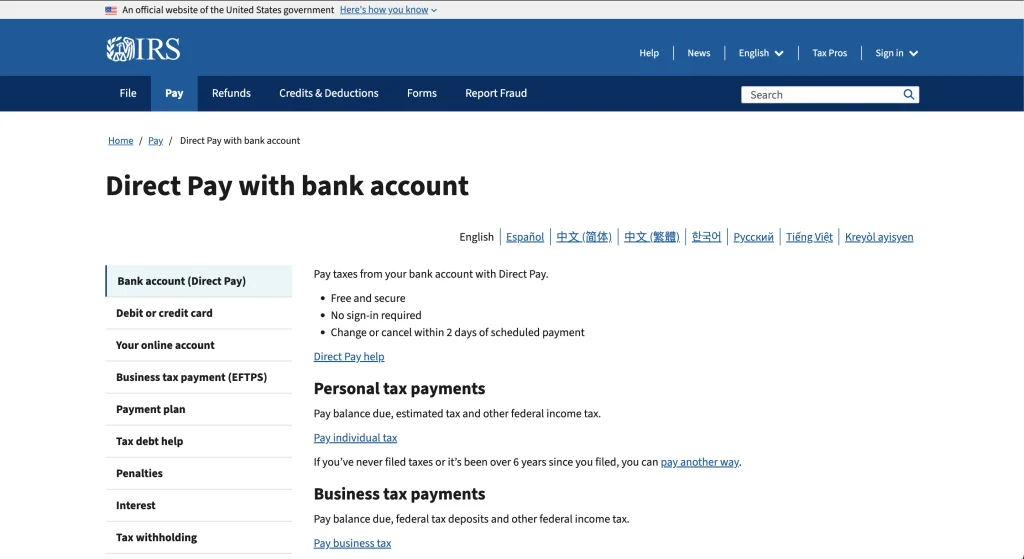
State estimated payments run on their own portals and sometimes their own deadlines. Handle both on the same day so neither slips.
If you or your spouse holds a W-2 job, you can skip quarterly estimated taxes entirely. File a new W-4 with additional withholding on line 4(c) sized to cover the side income.
This beats estimated payments for a reason worth understanding. The IRS treats withholding as paid evenly across the year no matter when it happened, so a large December adjustment retroactively covers a January shortfall. An estimated payment made in December cannot do that. Freelancers who realize in November that they underpaid have exactly one clean fix, and this is it.
April 15, June 15, and September 15 of 2026, then January 15, 2027. The September payment covers income earned June 1 through August 31.
Yes if you expect to owe $1,000 or more after withholding and refundable credits. Below that, you can settle up when you file.
Interest accrues on that period’s shortfall at the underpayment rate, currently 7%, compounded daily. On a $5,000 shortfall that runs about $29 per month.
You can pay ahead without penalty. Paying the whole year in September does not cure a missed April or June installment, because the penalty is calculated period by period.
Yes. Paying 100% of last year’s tax, or 110% above $150,000 AGI, avoids the penalty regardless of how much more you earned this year. You still owe the balance at filing.
They can. Both reduce taxable income, so recalculate before September 15 rather than waiting for a refund in April.
Use the annualized income installment method on Form 2210 Schedule AI, which sizes each payment to income you actually received in that period.
Sources: IRS Form 1040-ES (2026) · IRS Topic 306, underpayment of estimated tax · IRS Direct Pay · IRS, estimated taxes
Related
Small business taxes for LLC owners in 2026: self-employment tax, the QBI deduction, four new Schedule 1-A deductions, quarterly payments, and deadlines.
Self-employed health insurance in 2027: premiums up 14%, the returning subsidy cliff at 400% FPL, and the deduction rule your spouse's job can disqualify.
The 2026 1099-K threshold is $20,000 and 200 transactions, but nine states set it far lower and no form never means no tax. Full rules for resellers.

